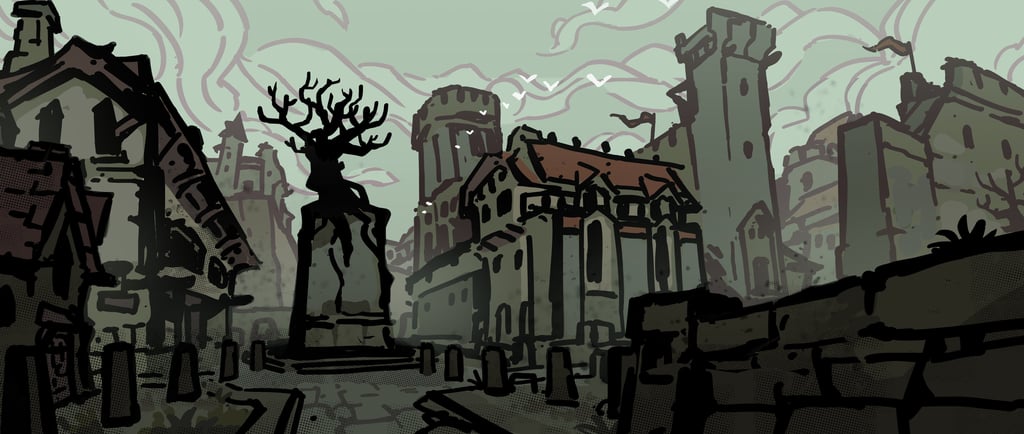
As a Concept Artist I've spent a lot of my professional work studying about and designing environments for interactive play. When people hear Concept Art, they usually think of Illustration. Image making that renders beautiful pictures they see in marketing material and fancy Art Books.
That's a bit of a misnomer. The reality of Concept Art is more about studying the history, lore and theme of a culture and space. Developing consistent visual ques and symbols that help communicate all of that depth at a glance, and finally, packaging that into hundreds of drawings, sketches, diagrams and yes, sometimes beautiful Illustrations.
Far more important than the artists craft (their ability to draw and render), is the resource gathering and knowledge they develop as a precursor to the image-making process. Understanding the potential for agency the space provides and the ways it responds to Character input.
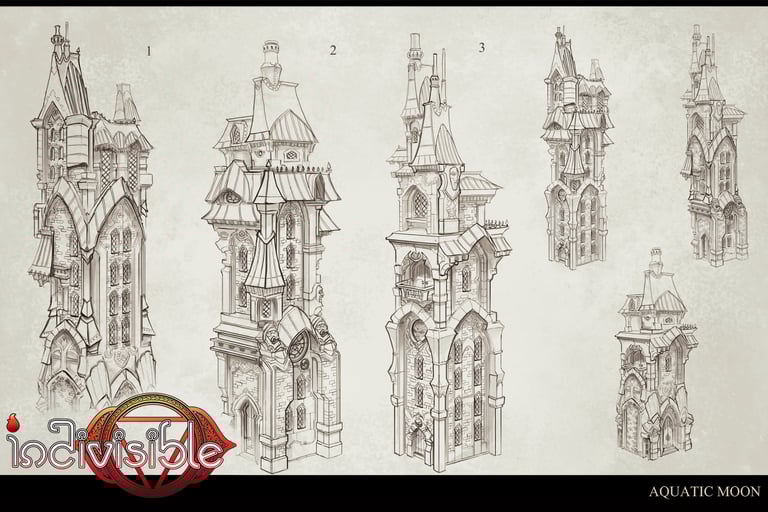
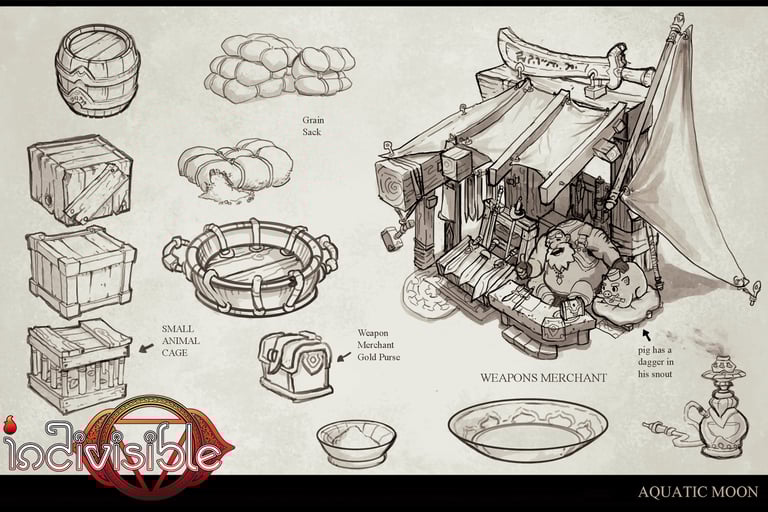
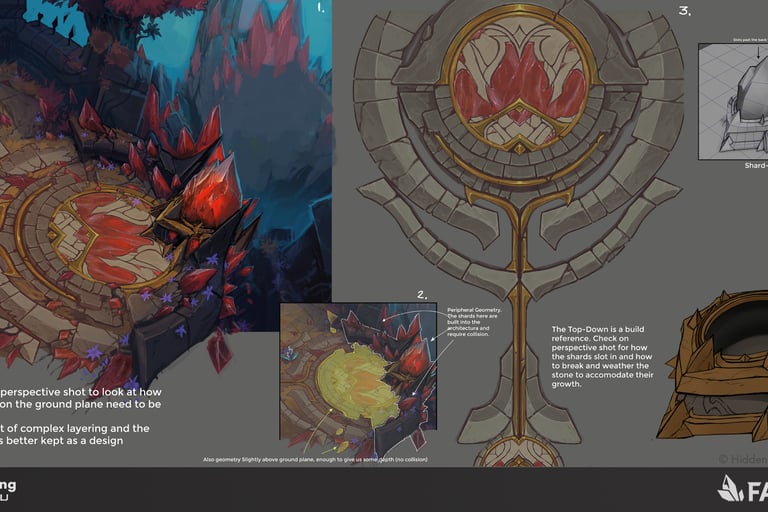
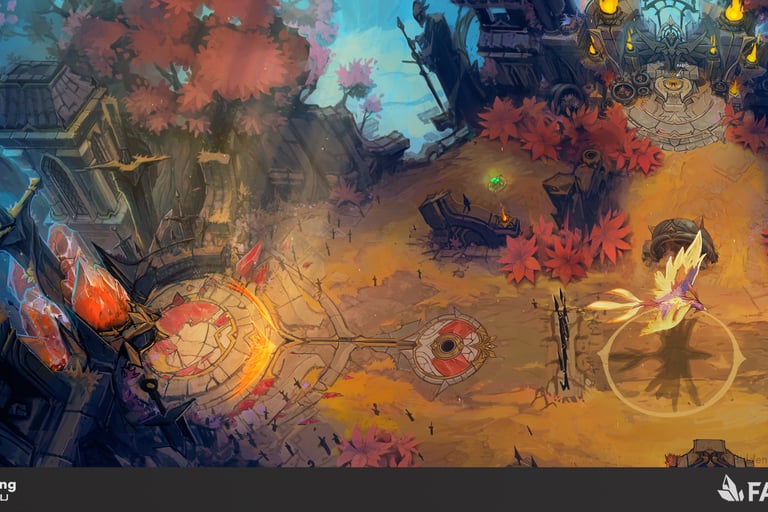
This brings us to TTRPG Location design. Those of you that have dabbled must recognize some important similarities between my description of what a Concept Artist does in games and how Location based Adventures are built (particularly in the OSR).
Here are some direct points of comparison that I've been able to easily make, that are in my opinion good fundamentals in both disciplines:
THEME
A coherent and focused theme is in my opinion the heart of any good design. You need to know what you're trying to communicate and Theme is the de-facto anchor point for all of your decisions going forward.
There are so many ways to approach developing a theme, I wouldn't presume to give you a definitive guide (especially not in a format this short), but here are some of the ways I think about it.
It needs to be simple enough to coherently describe it in one sentence.
For example: A Cathedral submerged in a vast marsh, haunted by a court of deadly pixies.It can be as abstract or concrete as you like, but when you write it down, the idea should be clear to you.
Every Theme should have a twist built in. So if there's an expected element, there should be something surprising that flips it on it's head.
For example: A Wizards Tower when unlocked with a special key, leads to the inside of the wizards heart.
RESEARCH
Once you have your theme, you can now do your research. This is an important step if you care to put some meat on the bones of your premise. Any feeling of depth and complexity you get from a lot of media is in large part due to the time spent learning about your subject matter and the exciting stuff that relates to it (historic, scientific, artistic, visual or written references are all great).
You won't always have a lot of time for this step, but it's important never to skip it and get excited about the work you're about to do.
Joseph R Lewis is a fantastic Adventure writer, and he has a perfect Video about this exact sort of thing on Youtube: https://www.youtube.com/watch?v=mieJ0h4KA2c&t=230s
He suggests making lists with names and information on anything and everything relating to the Adventure (or in our case the theme). Compile everything, so you can easily reference it all as you develop the space.
OUTLINES
Once you have your Theme, and you've done your research, it's a good idea to outline your goals. Like in Concept Art, it's important to understand your scope (how much time you have to develop the project) and make sure you don't keep adding on features that'll slow you down and eventually cause you to give up. On that note, I really wish I would follow my own advice, I fall into this trap all the time on personal projects with no external deadlines.
You also want to make a bullet list of every core element you want to include in your location (things like peril, treasure, interactivity etc.).
Last and most important, write a brief summary of what happened in the location before the Players arrive. Understand the places significance to any factions and NPCs tied to it and a brief history of the space.
Thus far the blog post has mostly been my making observations between the similarities in design processes I use at work to make pretty Video Game environments and those I think about when making an Adventure Location for a Tabletop Game. The value of this I feel, is to outline how solid principles transcend mediums. Good world building is in my opinion rooted in your ability to pick a compelling theme and stay true to it throughout the creative process, even when it gets in your way and causes friction.
Red Hook, the makers of Darkest Dungeon have a really good GDC talk wherein they articulate this sort of idea much more succinctly than I was able: https://www.youtube.com/watch?v=k4ETK1C1KNs&t=14s
But assuming we're spending the appropriate amount of time obsessing over theme, how to articulate it and researching everything to do with it. What are some other ingredients we should be focusing on if we're looking to make a solid gameable Location?
There are so many incredible resources about this in the OSR blogosphere and beyond, I probably couldn't list them all (although I'll try and include the ones I can think of where relevant). My primary contribution will be a little checklist I've made for myself, listing ingredients I want to work into a location wherever possible:
• Background
Built on your theme and research. It is an overview to help the GM understand what the space is, what it's history is and why it matters to the people involved. Being partial to the OSR mode of play, I would absolutely discourage setting up any situations or plots that have a pre-designed outcome or resolution. It's your job to lay out the premise and let the Players create the story when they touch the space.
• Powder Keg
I'm unsure who came up with this concept for designing Locations, but it's one of my absolute favorites to use when designing any space.
It's a setup that precariously balances on the edge of disaster or spectacle. This can be factional conflict, a looming threat or a leaking portal into another dimension. Importantly it's a situation that is likely to tip when the Characters get involved. This is the secret sauce that insures something exciting will happen at the table. It doesn't need to be front-loaded, but a pinch of gunpowder makes everything more thrilling!
• Pressure
On the Characters time, resources, knowledge or standing. Without this, the session will meander on, get stuck or end on a whimper. Not every Location needs to have a Timer associated with it (although they certainly don't hurt if you find the play tests are yielding slow games).
• Interactivity
Things to poke and prod that respond and change the Location. This sometimes gets forgotten, when you're over fixated on theme and connecting all your keyed spaces into something coherent. Don't forget to include some elements that the players can poke and prod at. Levers that when pulled, shift and change the character of the space.
Think classic Zelda dungeons that mess with water levels and opening/closing paths. Things like shifting staircases or collapsing floors.
Meaningful choices are at the heart of what makes these games so exhilarating. The best way to design a location that facilitates that, is to have elements that demonstrate the consequences of players choices in big dramatic ways.
• Factions
Groups looking to achieve a particular goal in-conflict with others (Characters or Factions). This adds an element of the encroaching outside world. It makes the space feel like it's connected to the setting and creates stakes for elements other than your Player Characters. They're also something clever Players can manipulate and control. Fundamentally, this is just an NPC variant of the Interactivity section. It's good to include interactivity of any kind!
• Peril
Traps, Monsters, Curses, new enemies when you cross a Faction etc. This section is self explanatory. It plays into peril and stakes. If there's no friction, there's no drama!
• Treasure
Exciting playthings for the Players, ideally in-theme with the Location. If Factions are the NPC variant of the Interactivity section, this is the object version of the same thing.
• Random Encounters
Not just monsters that attack instantly or rely on reaction tables, but events themed to the setting that further establish or complicate the Powder Keg. Random Encounter tables are an incredibly interesting subject in their own right and I'd like to do a focused deep-dive at some point in the future.
The list and points of focus are far from comprehensive or definitive, but I have made it with principles of good Playable spaces in mind.
Interactivity, player agency, meaningful choices and consequences are all strengths in which Tabletop RPGs excel over any other interactive medium. And playing to a mediums strengths should be a core pillar for any designer.
There is a trap for us here, where if we play too much to the conceits necessary for designing video game spaces (which is where I've spent the vast majority of my career ), we'll end up railroading players into pre-made narratives, or listing possible branching outcomes that would make our games indistinguishable from Computer RPGs. The above list is my attempt to summarize a long history of Game Design and TTRPG wisdom, in a way I've found most practical when trying to come up with fun Locations.
There's plenty more that goes into the craft, like strong layout that helps people find information quickly, good dungeon mapping and writing, Area Keys etc. And I'd like to dive into some of that stuff in future posts. If you'd like to get updates when I decide to cobble a Blog post together, consider subscribing to my newsletter.
To pass the buck forward, here are some of my favorite resources on location design:
Goblin Punch and his amazing Dungeon Checklist:
https://goblinpunch.blogspot.com/2016/01/dungeon-checklist.html
Josiph R Lewis and his amazing Youtube channel detailing the Adventure design process:
https://www.youtube.com/@josephrlewis1/videos
The Designing Dungeons Course by Josh McCrowel and Warren D.
https://dungeons.hismajestytheworm.games/
And this great Blog post by Gus L: So You want to build a Dungeon?
https://alldeadgenerations.blogspot.com/2021/03/so-you-want-to-build-dungeon.html